
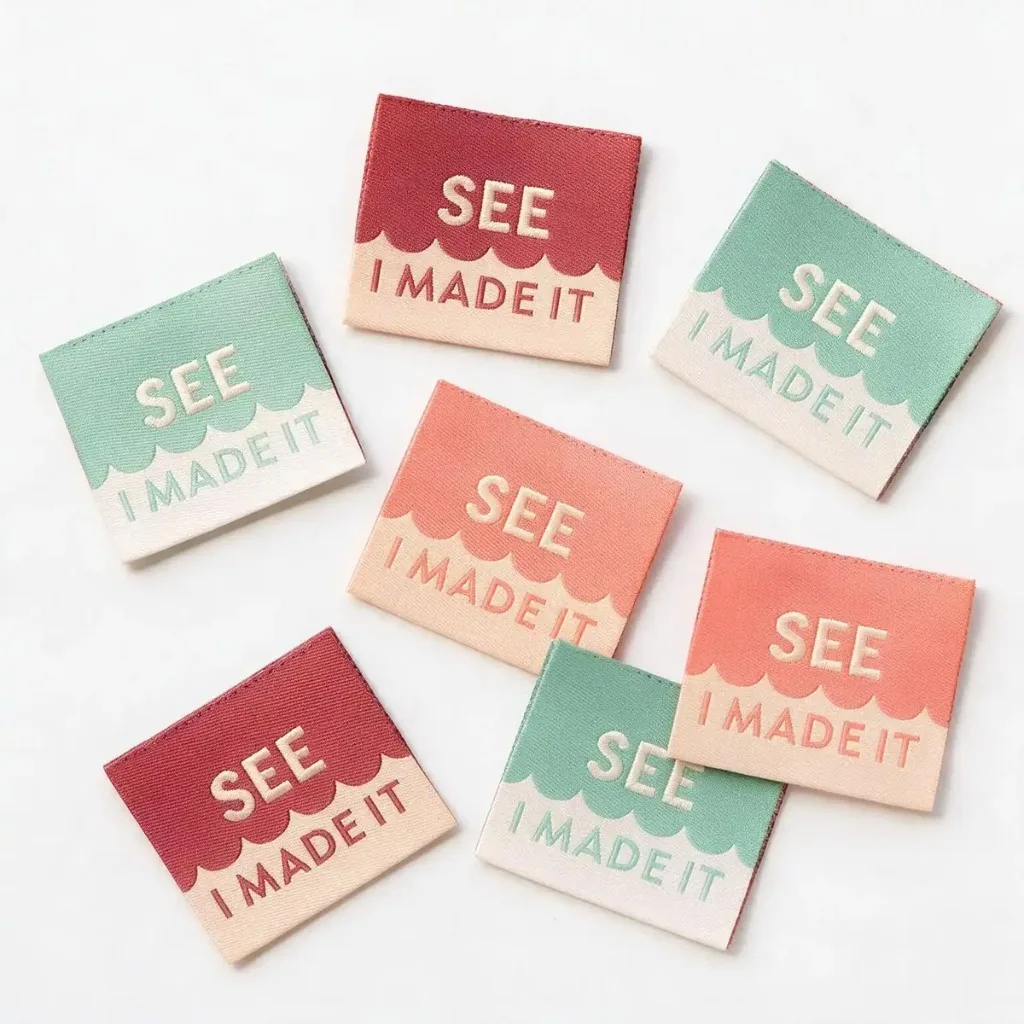
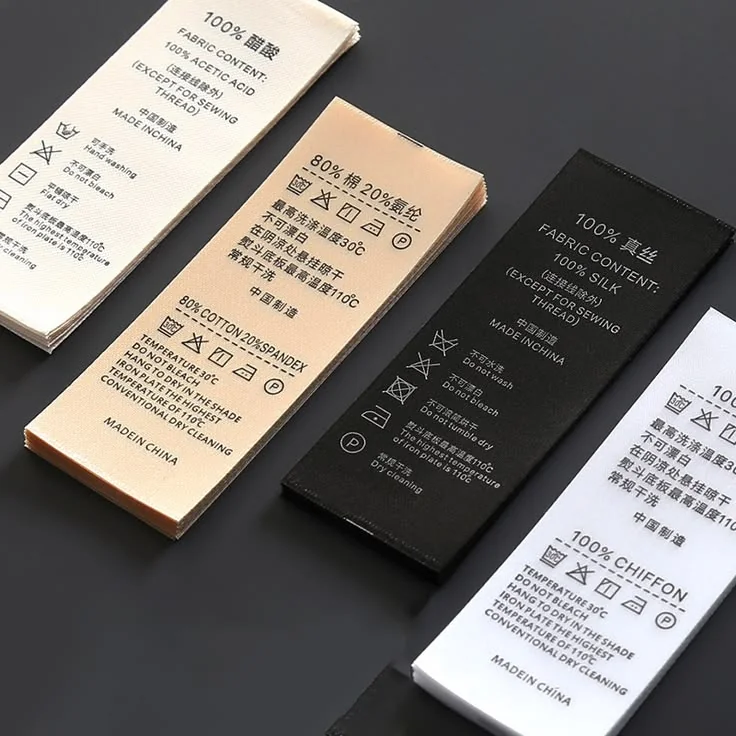
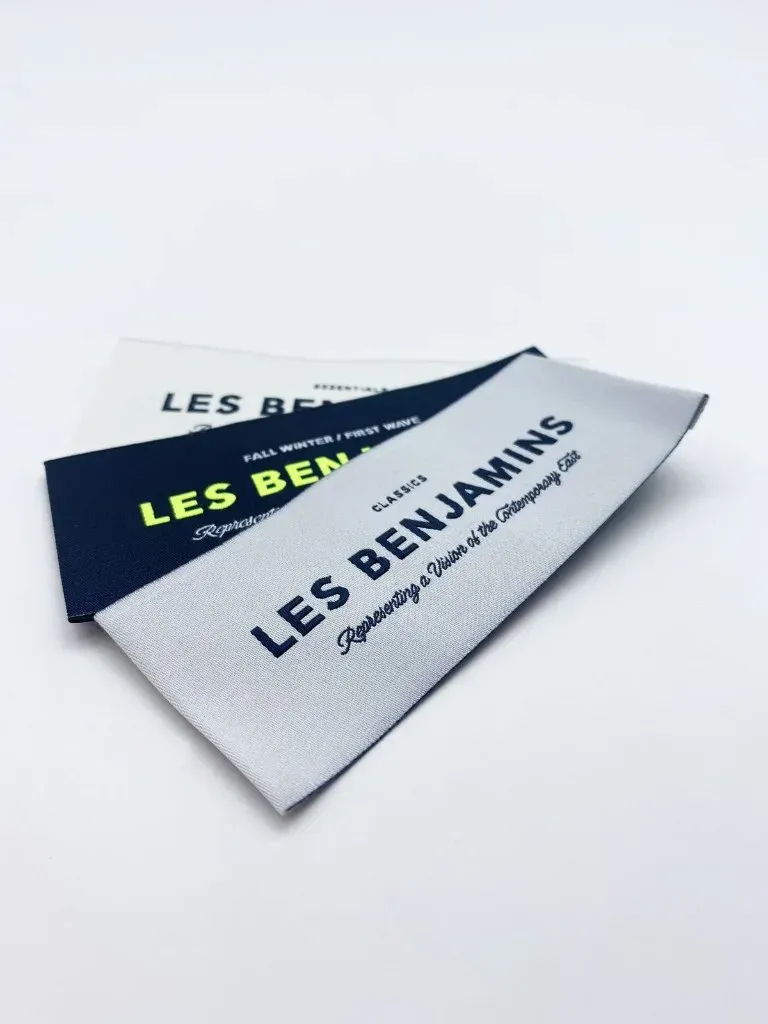
The brand label on a garment does more than show a name — it finishes the product’s look. Woven labels form the brand name or logo in yarn and are used especially on textile and apparel products.
Unlike printed labels, the design is not applied with ink; it is built into the weave. Brands choose woven labels when they want logos and type to sit on a fabric-like surface.
Where are woven labels used?
Woven labels can be used on different textile products:
- Apparel: T-shirts, shirts, jackets, trousers and dresses.
- Bags and accessories: Bags, wallets, hats and similar goods.
- Home textiles: Towels, bedding, blankets and textile accessories.
- Footwear: Models that need brand information on a textile surface.
- Special textile products: Designs where the logo or product identity should stand out.
What woven label types are there?
Woven labels can be prepared by use area, size and fold. Straight-cut labels can be sewn onto a surface; folded styles follow the seam or design of the product.
Where the label will be sewn, how much face stays visible and where the logo sits should be reviewed before production.
What to check when choosing a woven label
Logo detail, type size, ground colour and position on the product should be considered together. Very fine lines or small type may not read as clearly as expected because of how weaving works.
So the design’s fit to the label size and how it will be used should be checked before production.
FAQ: What is the difference between woven and printed labels?
The main difference is how the design is made. On a woven label, logo and type are formed in yarn; on a printed label, the design is transferred onto a surface by print. The choice follows product use and the look you want.
For size, fold and design details, see our woven label product page or contact BG Label.
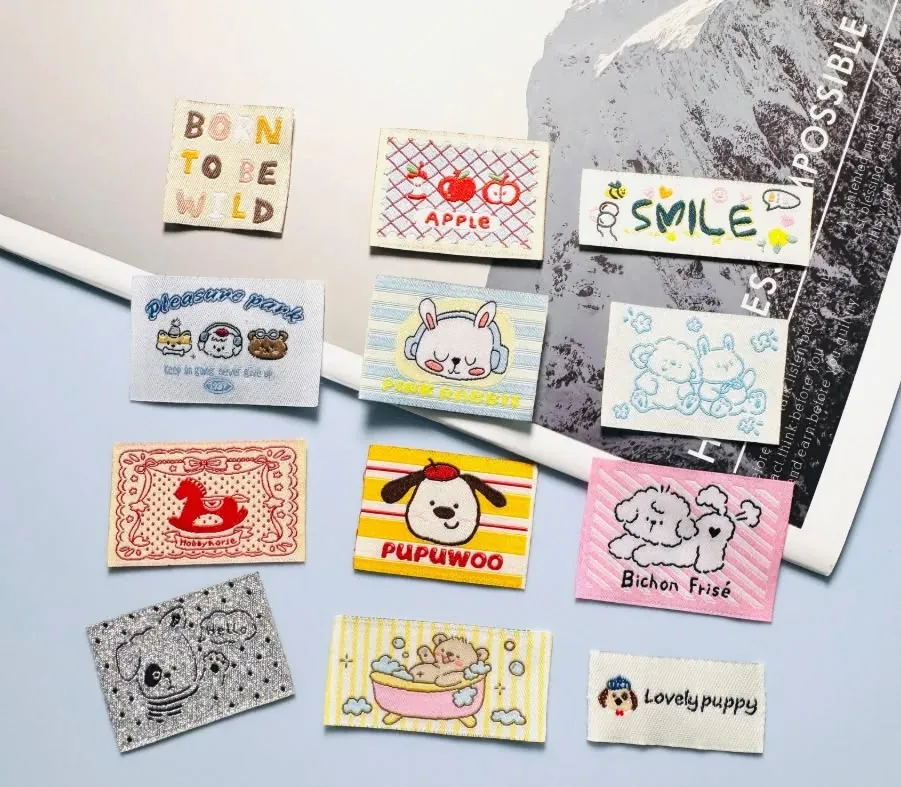
- Woven Label
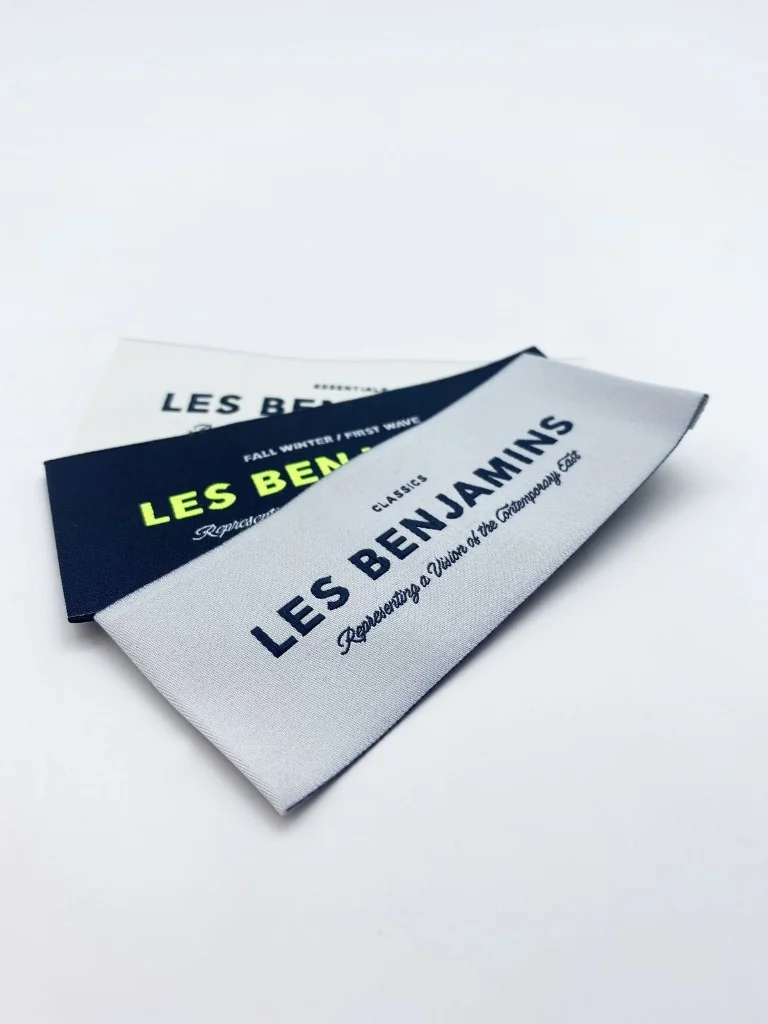
 Woven Label